Choosing between a mobile and stationary asphalt plant involves more than comparing equipment quotations. Transportation frequency, production requirements, site preparation, fuel consumption, and project duration all influence the total investment. Although a mobile configuration may reduce relocation expenses, a stationary installation can offer better long-term value for continuous production. Understanding how these factors affect the asphalt plant price(planta de asfalto precio) helps contractors select equipment that matches their operating plans rather than simply choosing the lowest initial quotation.
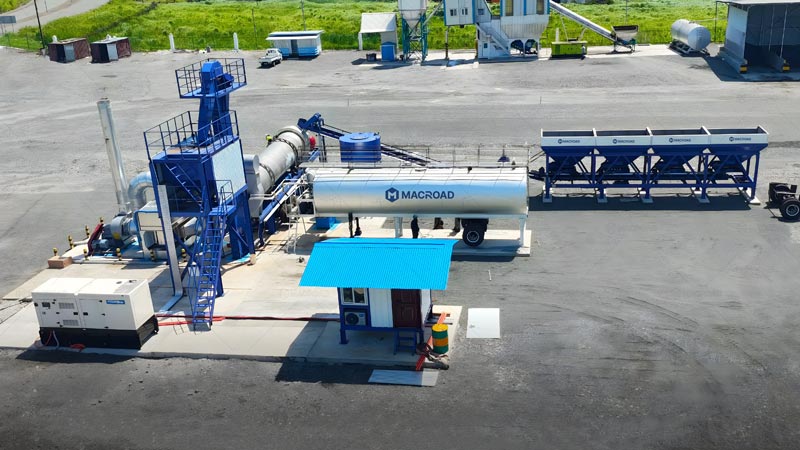
How Mobile and Stationary Configurations Affect Asphalt Plant Price
The main difference between mobile and stationary asphalt plants lies in their structural design and installation requirements. These differences determine manufacturing costs, transportation arrangements, and the investment needed before production begins.
Mobile Asphalt Plant: Lower Relocation Costs
A mobile asphalt plant integrates major components into transportable modules or chassis. Its compact arrangement allows contractors to move equipment between construction sites with less dismantling and reassembly. This configuration is particularly useful for road construction projects distributed across different locations.
However, mobility does not automatically mean a lower purchase price. Reinforced transport structures, compact equipment arrangements, hydraulic systems, and quick-connection components can increase manufacturing costs. The mobile asphalt plant price(planta de asfalto móvil precio) therefore depends on both production capacity and the level of mobility included in the configuration.
Stationary Asphalt Plant: Investment for Continuous Production
A stationary asphalt plant is designed for long-term installation at a dedicated production site. Its larger structures, permanent foundations, and integrated material handling systems can require more initial site preparation.
Nevertheless, stationary configurations often provide greater flexibility for expanding storage capacity, adding auxiliary equipment, and integrating larger production systems. For contractors supplying multiple road projects from one central location, these advantages can justify the initial investment.
Major Factors That Change the Equipment Budget
Even within the same equipment category, two asphalt plants with similar rated capacities can have significantly different quotations. Buyers should examine the following technical and commercial factors before comparing prices.
Production Capacity and Plant Configuration
Production capacity is one of the most important determinants of asphalt plant price. Larger plants generally require higher-capacity dryers, burners, mixing systems, elevators, and screening equipment.
For example, a contractor producing asphalt for local road maintenance may not need the same configuration as a supplier serving highways or several infrastructure projects simultaneously.
| Production Requirement | Typical Application | Budget Consideration |
|---|---|---|
| Small capacity | Local roads and maintenance | Compact configuration and lower initial investment |
| Medium capacity | Municipal roads and regional projects | Balanced production and operating costs |
| Large capacity | Highways and commercial supply | Higher equipment investment and infrastructure requirements |
The appropriate capacity should reflect actual hourly demand, daily working hours, and expected utilization. Purchasing an oversized plant can increase capital and energy costs without generating additional revenue.
Transportation and Installation Requirements
Transportation costs can significantly change the total mobile asphalt plant price. Buyers should consider shipping dimensions, container requirements, loading arrangements, inland transportation, and the distance between the port and project site.
For stationary plants, transportation may involve more oversized components and complicated lifting arrangements. Installation can also require concrete foundations, structural assembly, electrical connections, and commissioning.
Mobile plants generally simplify relocation, but they still require suitable ground conditions, utility connections, and sufficient working space. A realistic budget should include these expenses rather than treating the equipment quotation as the complete project cost.
Burner System and Fuel Consumption
The burner system directly influences daily operating expenses. Different fuel options, including diesel, natural gas, and coal, have different equipment requirements and local supply costs.
A high-efficiency burner can reduce fuel consumption per ton of asphalt, although its purchase price may be higher. When comparing configurations, buyers should evaluate fuel consumption under similar production conditions instead of relying exclusively on burner specifications.
Environmental Protection and Dust Collection
Environmental systems are another important budget component. Baghouse dust collectors, exhaust treatment equipment, noise reduction measures, and recycled material handling systems can increase the initial investment.
However, these components help control emissions, recover useful materials, and meet local environmental requirements. Their specifications should be determined according to applicable regulations, production capacity, and site conditions.
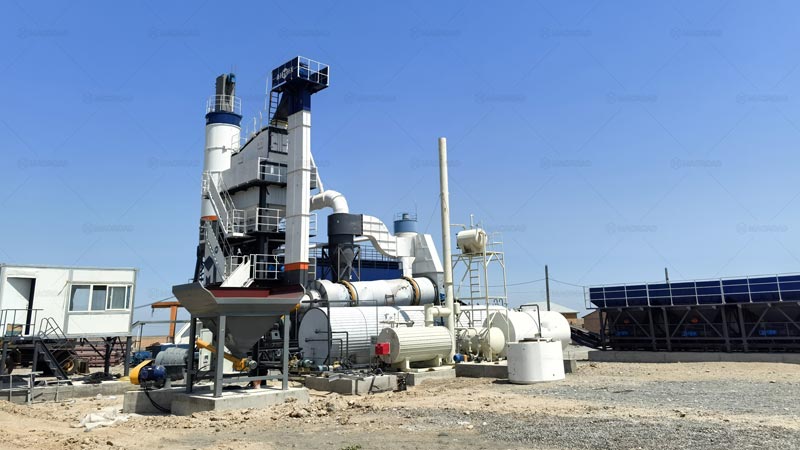
Why a Mini Asphalt Plant May Be a Practical Alternative
A mini asphalt plant can be a suitable option for contractors with limited production requirements, restricted installation space, or relatively short construction schedules.
Its smaller configuration generally requires less installation space and may reduce transportation and infrastructure expenses. For companies handling rural roads, municipal maintenance, and small infrastructure contracts, this arrangement can help control initial capital expenditure.
However, a smaller plant is not necessarily the most economical choice in every situation. If production demand frequently exceeds its rated capacity, contractors may face longer working hours, higher unit costs, and difficulties meeting delivery schedules.
Before selecting a mini asphalt plant(mini planta de asfalto), buyers should compare its actual output with daily project demand and consider whether future contracts may require additional production capacity.
Mobile vs Stationary Asphalt Plant: Comparing Total Ownership Costs
The purchase quotation represents only one part of the investment. A more reliable comparison considers the total cost of ownership throughout the equipment’s expected service life.
| Cost Category | Mobile Plant | Stationary Plant |
|---|---|---|
| Initial equipment cost | May include additional mobility features | Depends on structural scale and configuration |
| Transportation | Designed for repeated relocation | Usually more complicated to relocate |
| Installation | Generally simpler | Often requires permanent foundations |
| Operating costs | Depend on fuel, labor, and utilization | Depend on fuel, labor, and utilization |
| Expansion | Limited by modular design | Often easier to expand at a permanent site |
| Best application | Multiple temporary project locations | Long-term centralized production |
For contractors working in remote areas or across multiple regions, mobility can generate savings by reducing equipment relocation time. Conversely, businesses operating a permanent asphalt production facility may benefit more from a stationary configuration with higher utilization and expansion potential.
How to Prepare a More Accurate Asphalt Plant Budget
Before requesting quotations, buyers should prepare a project-specific equipment specification. This makes supplier comparisons more meaningful and reduces the risk of unexpected expenses after purchase.
- Define production demand: Estimate hourly and daily asphalt requirements, including peak-season demand.
- Evaluate project locations: Determine whether the plant will remain at one site or serve multiple construction locations.
- Check local fuel availability: Compare fuel prices, supply stability, and burner compatibility.
- Confirm environmental requirements: Identify applicable emission, dust collection, and noise control standards.
- Calculate installation expenses: Include foundations, electrical systems, commissioning, and local labor.
- Request a complete quotation: Clarify included components, spare parts, transportation arrangements, warranty, and technical support.
It is also important to ask suppliers for estimated fuel consumption per ton, installation schedules, and maintenance requirements. These figures provide a more practical basis for comparing equipment than the purchase price alone.
Matching the Plant Configuration to Your Project
The right asphalt plant(planta de pavimentos) is the one that delivers the required production volume at a competitive total operating cost. Mobile configurations are generally more suitable for contractors handling geographically dispersed projects, while stationary plants are often preferable for continuous production at established facilities. A mini asphalt plant can provide another option when demand and available space are limited.
When evaluating suppliers, request a configuration based on your target capacity, aggregate specifications, fuel availability, local environmental standards, and installation conditions. A detailed technical quotation from AIMIX can help you compare equipment configurations, identify necessary auxiliary systems, and estimate the investment required for your asphalt production project.