Port and airport construction projects represent some of the most demanding civil engineering challenges due to their strict structural requirements, isolated locations, and tight deadlines. Pavements in these environments must withstand heavy continuous wheel loads, dynamic impacts from landing aircraft, and harsh coastal climate conditions. Consequently, securing a reliable mix from a high-performance asphalt plant(planta de pavimentos) is fundamental to ensuring long-term surface durability and structural integrity.
In large-scale maritime and aviation infrastructure developments, traditional stationary asphalt plants often present logistical hurdles, such as long haulage distances, increased transport costs, and temperature loss during transit. Deploying a flexible mobile asphalt plant addresses these constraints directly, providing high-volume output adjacent to the job site. This construction value analysis examines how mobile asphalt plants optimize capital expenditure, maintain hot-mix quality, and elevate operational efficiency in complex port and airport developments worldwide.
Strategic Operational Advantages of Mobile Plants in Large Infrastructure
Modern transport hubs require asphalt mixes that meet rigorous quality standards, often demanding precise aggregate gradations and modified binders. The introduction of mobile asphalt production systems has transformed how contractors manage materials logistics for runway layers, container terminal aprons, and perimeter service roads.
Elimination of Haulage Logistics and Thermal Loss
One of the primary advantages of utilizing a mobile asphalt plant(planta asfaltica móvil) on-site is the drastic reduction in hauling distances. Asphalt mixtures must be delivered and compacted within specific temperature ranges to achieve required density levels. Long transit times from off-site suppliers risk mix cooling, segregation, and premature hardening, which compromise compaction quality.
- Direct Mix Delivery: Having production capacity adjacent to the runway or dock eliminates delay risks caused by external traffic congestion.
- Quality Assurance: Constant discharge temperatures lead to higher density uniformity across large paved surfaces.
- Fuel Cost Reduction: Shorter transport loops significantly decrease fleet fuel consumption and logistics overhead.
Rapid Deployment and Site-to-Site Mobility
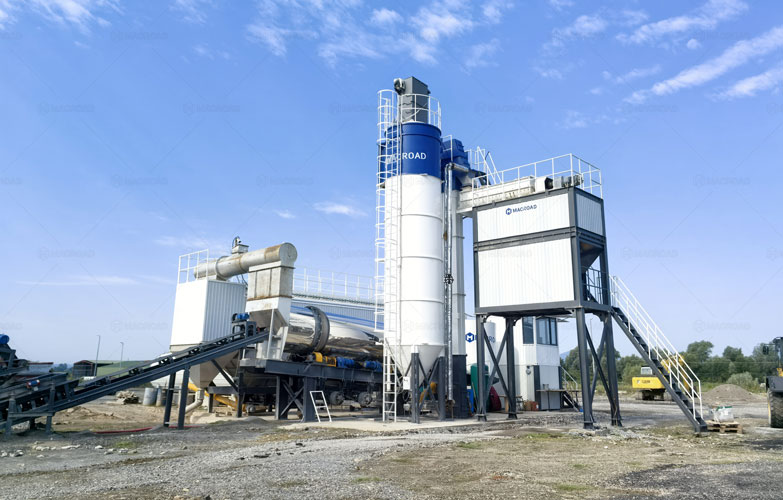
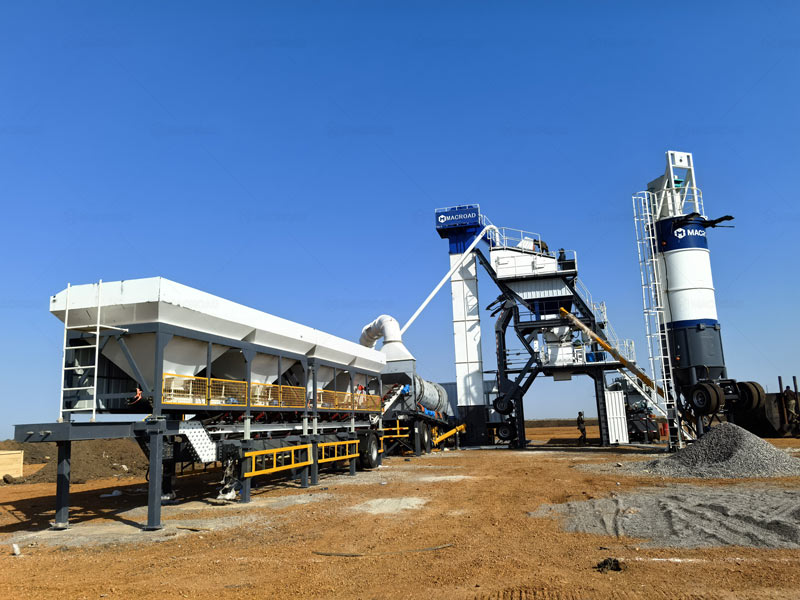
Unlike conventional fixed installations that require extensive foundation work and weeks of assembly, mobile plants feature modular, wheel-mounted designs. Key units—including cold aggregate feeders, drying drums, dust collectors, and mixing towers—are built on chassis systems designed for quick assembly and disassembly. For multi-phase projects or remote airport extensions, this flexibility minimizes downtime during relocations.
Economic Efficiency and Capital Allocation
Evaluating the economic value of mobile mixing equipment involves looking at total cost of ownership, operational savings, and project completion speed. The ability to produce hot-mix asphalt on demand allows contractors to scale production precisely around project milestones.
Optimizing Equipment Capacity for Diverse Sub-Projects
Port and airport developments consist of varying paving demands. Main runways and container yards require high-capacity, continuous mixing, whereas service roads, parking facilities, and auxiliary paths require smaller batch sizes. In many regional developments, contractors integrate a mini asphalt plant(mini planta asfáltica) alongside high-output primary units to handle smaller auxiliary paving tasks efficiently without disrupting main production runs.
| Project Component | Paving Requirement | Recommended Plant Type | Key Operational Benefit |
|---|---|---|---|
| Main Runway / Container Yard | High volume, heavy wheel load binder & surface layers | High-capacity mobile asphalt plant | Continuous high-tonnage output with consistent thermal control |
| Aprons & Taxiways | Strict smoothness and load distribution specs | Batch-type mobile asphalt plant | Precise recipe control and flexible mix adjustments |
| Service Roads & Maintenance | Intermittent, low-to-medium volume paving | Mini asphalt plant | Cost-effective deployment with reduced fuel consumption |
Global Case Insight: Coastal and Island Infrastructure
The construction value of localized production becomes especially clear in developing markets and coastal regions. For instance, in maritime and regional airport projects across South America, securing reliable hot-mix supply from third-party vendors can be challenging due to geography and infrastructure limitations. Contractors working with asphalt plants in Peru have increasingly adopted mobile mixing technology to overcome transport bottlenecks along coastal corridors and remote regional airstrips. By producing mixes on site, these projects maintain continuous operations, protect against supply chain interruptions, and achieve faster ROI.
Technical and Environmental Performance Features
Modern mobile mixing plants incorporate advanced technology to align with strict environmental standards often enforced in international airport and seaport expansion projects.
Advanced Automation and Batch Precision
Equipped with computerized control systems, modern mobile asphalt plant in Peru(plantas de asfalto Perú) enables real-time monitoring of aggregate moisture, bitumen metering, and baghouse filtration. This automation ensures strict compliance with aviation authorities’ pavement specifications while allowing quick recipe switches between different binder layers.
Environmental Compliance in Sensitive Zones
Ports and airports are frequently located in ecologically sensitive coastal or suburban regions. Mobile units feature efficient multi-stage dust collection systems (such as cyclone pre-separators combined with pulse-jet fabric baghouses) to keep particulate emissions well below international regulatory limits. Furthermore, optional warm-mix asphalt (WMA) capabilities lower production temperatures, reducing burner fuel consumption and greenhouse gas emissions.
Streamlining Lifecycle Value for Critical Works
Integrating mobile asphalt mixing equipment into port and airport construction projects yields measurable improvements in project scheduling, material consistency, and operational safety. By positioning production directly at the construction site, engineering teams gain complete control over mix quality, temperature retention, and batch timing. This localized supply chain model reduces transport expenses and guards against costly project delays. As global trade and aviation networks continue to expand, mobile asphalt production units remain an essential asset for delivering durable, high-performance pavements on time and within budget.