The vast, rugged terrains of Latin American mining zones present unique logistical and technical challenges for road construction. Static asphalt plants often prove impractical due to high transport costs, remote site locations, and the episodic nature of mining road maintenance. This discussion evaluates the applicability of mobile asphalt plants as a pragmatic alternative, weighing their operational flexibility against production constraints specific to high-altitude and tropical environments.
Operational Context of Mining Roads
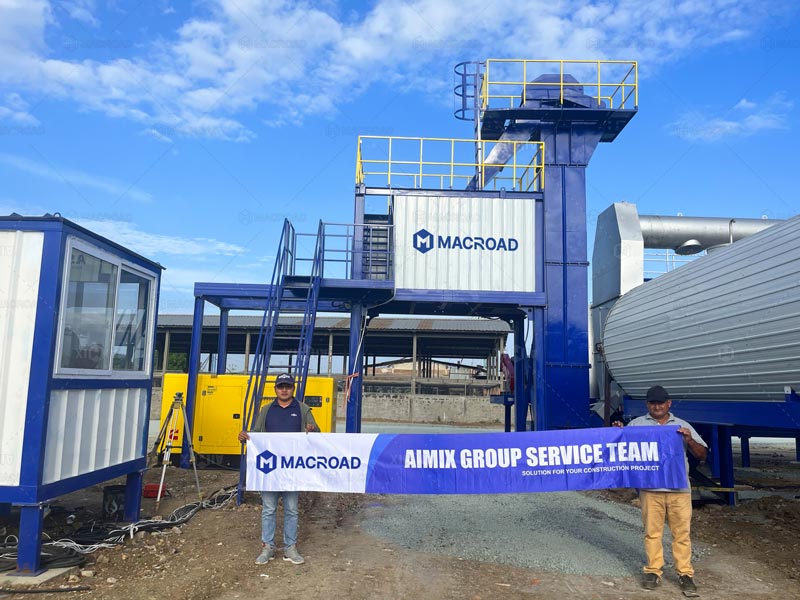
Mining roads in countries such as Chile, Peru, and Colombia typically traverse mountainous or jungle terrain, with temporary haul routes that shift as extraction advances. These roads require frequent patching and periodic resurfacing, but the low-volume, high-frequency demand rarely justifies a permanent asphalt plant installation. Moreover, the capital expenditure for a stationary plant—often exceeding $2 million—is difficult to amortize over short mine lifespans (5–10 years). This is where the modular design of a mobile asphalt plant(planta de asfalto móvil) becomes commercially and operationally attractive.
Mobility and Rapid Deployment
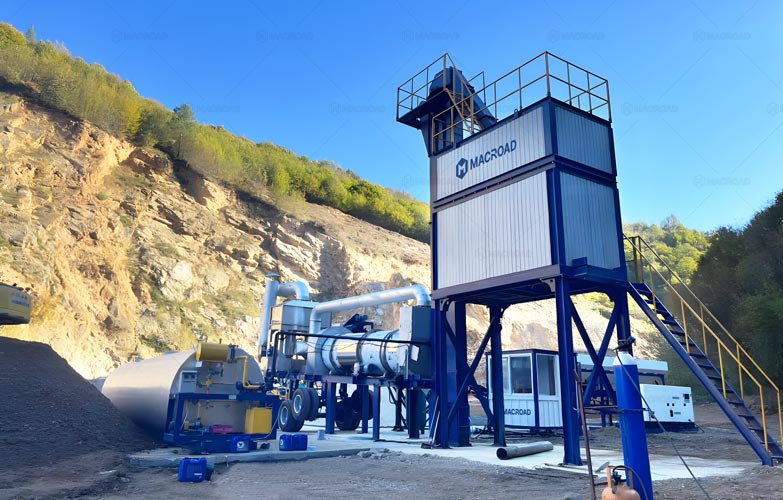
A mobile asphalt plant can be containerized or wheel-mounted, allowing relocation within 48–72 hours. For a mining operation shifting its crusher or processing plant every 18 months, this mobility eliminates the need for duplicate paving equipment. Unlike a stationary asphalt plant, which requires reinforced foundations and utility hookups, the mobile variant operates on compacted ground with a single diesel generator. Field tests in the Atacama Desert showed that a 60 t/h mobile plant was producing mix within 10 hours of arrival, compared to 14 days for a relocatable semi-stationary unit.
Capacity and Production Match
Most mining haul roads have a wearing course thickness of 5–8 cm and a total lane width of 8–12 m. Paving 1 km of such a road requires roughly 600–900 tons of asphalt mix. A mid-sized mobile asphalt plant (80–120 t/h) can produce this volume in a single 10-hour shift. For smaller access roads or emergency repairs, a mini asphalt plant (20–40 t/h) offers even lower fuel consumption and simpler controls, though it may struggle with continuous slipform paving projects. The key is matching plant output to the daily paving rate, avoiding both idle time and excessive surge bin storage.
Economic Viability and Lifecycle Costs
The initial purchase price of a mobile asphalt plant is 30–40% lower than a stationary equivalent of the same capacity. However, the per-ton production cost is typically 8–12% higher due to smaller drying drums and less efficient heat recovery. This trade-off is acceptable in mining contexts where transport savings dominate. For example, trucking hot mix 200 km from a city-based asphalt plant(planta asfáltica) to a remote mine adds $25–$35/ton in logistics, whereas an on-site mobile plant cuts that to $5–$8/ton for aggregate hauling. When evaluating an asphalt plant for sale, mining contractors should request a total cost of ownership (TCO) model that includes mobilization, dismantling, and storage between production campaigns.
Fuel and Aggregate Considerations
Latin America has varied fuel qualities—from low-sulfur diesel in Brazil to high-sulfur bunker in parts of Central America. Modern mobile asphalt plants feature dual-fuel burners that can switch between diesel, heavy fuel oil, and even natural gas where available. For high-altitude sites (above 3,500 m), oxygen-enriched combustion systems are recommended to maintain drying efficiency. Aggregate moisture content in tropical mines (e.g., Panama, Ecuador) often exceeds 6%, requiring a longer drying zone—a feature found in premium mobile plants but absent in entry-level mini asphalt plant designs. Thus, site-specific material testing should precede any equipment selection.
Environmental and Regulatory Compliance
Environmental agencies across the region (e.g., SENACE in Peru, SEA in Chile) mandate fugitive emission controls for asphalt plants located near water sources or indigenous communities. Mobile plants now incorporate baghouse filters with <20 mg/Nm³ dust emission and activated carbon injection for VOC capture. These systems add 15–20% to the equipment cost but are non-negotiable for obtaining operational permits. Additionally, noise levels—often exceeding 85 dB(A) for stationary drum plants—are reduced to 75 dB(A) in enclosed mobile designs, facilitating night-time paving near camp areas.
Maintenance and Local Support
One overlooked aspect is the availability of spare parts and trained technicians. Major manufacturers of mobile asphalt plants have established distribution centers in Santiago and Lima, offering 24-hour parts delivery. For a mini asphalt plant(Para una mini planta de asfalto) used on a short-term exploration road, a basic tool kit and a laptop with diagnostic software suffice for most breakdowns. However, mining companies should negotiate a service-level agreement that includes remote troubleshooting via satellite internet, as many sites lack 4G coverage.
Case Study: Copper Mine in Northern Chile
A mid-sized copper operation at 4,200 m altitude replaced its stationary 160 t/h plant with a 100 t/h mobile asphalt plant after the original unit required a $400,000 overhaul. Over 30 months, the mobile plant produced 18,000 tons of mix for haul road maintenance, with an average uptime of 92%. The ability to move the plant 12 km closer to a new pit section reduced haul truck tire wear by 18%, indirectly saving $60,000 annually. The plant was then sold as a used asphalt plant for sale(venta de planta de asfalto) to a neighboring silver mine, recovering 55% of the initial investment.
Limitations and Risk Factors
Despite their advantages, mobile asphalt plants are not universal solutions. Production rates above 160 t/h are rare in mobile configurations, making them unsuitable for main highway projects or large airport runways. Also, the smaller aggregate feed bins (typically 12–18 m³) require frequent loader recharging, increasing wheel loader operating hours. In regions with heavy seasonal rainfall (e.g., the Amazon basin), open-frame mobile plants need custom weatherproof covers to prevent drum slippage and electrical shorts. Therefore, a thorough site audit—covering altitude, humidity, aggregate abrasiveness, and project duration—is mandatory before any purchase decision.
Ultimately, the applicability of mobile asphalt plants in Latin American mining roads hinges on a balanced trade-off between mobility and production efficiency. For mines with dispersed pit locations, variable production schedules, and a 3–5 year horizon, the mobile plant offers tangible cost savings and operational agility. Conversely, for large, stable mines with a decade of continuous paving, a stationary asphalt plant paired with a portable silo may yield better economics. The growing availability of used and new mobile units, combined with regional aftermarket support, has made this technology a realistic contender. Mining contractors are advised to run pilot trials with rented equipment before committing to a purchase, ensuring that the chosen model aligns with their specific aggregate properties and climatic challenges.